The mouth of the Sinnamary River, in northern French Guiana, is a natural site of major ecological and historical significance. Where the river meets the Atlantic Ocean, rich biodiversity concentrates, particularly in the mangrove areas lining the banks.
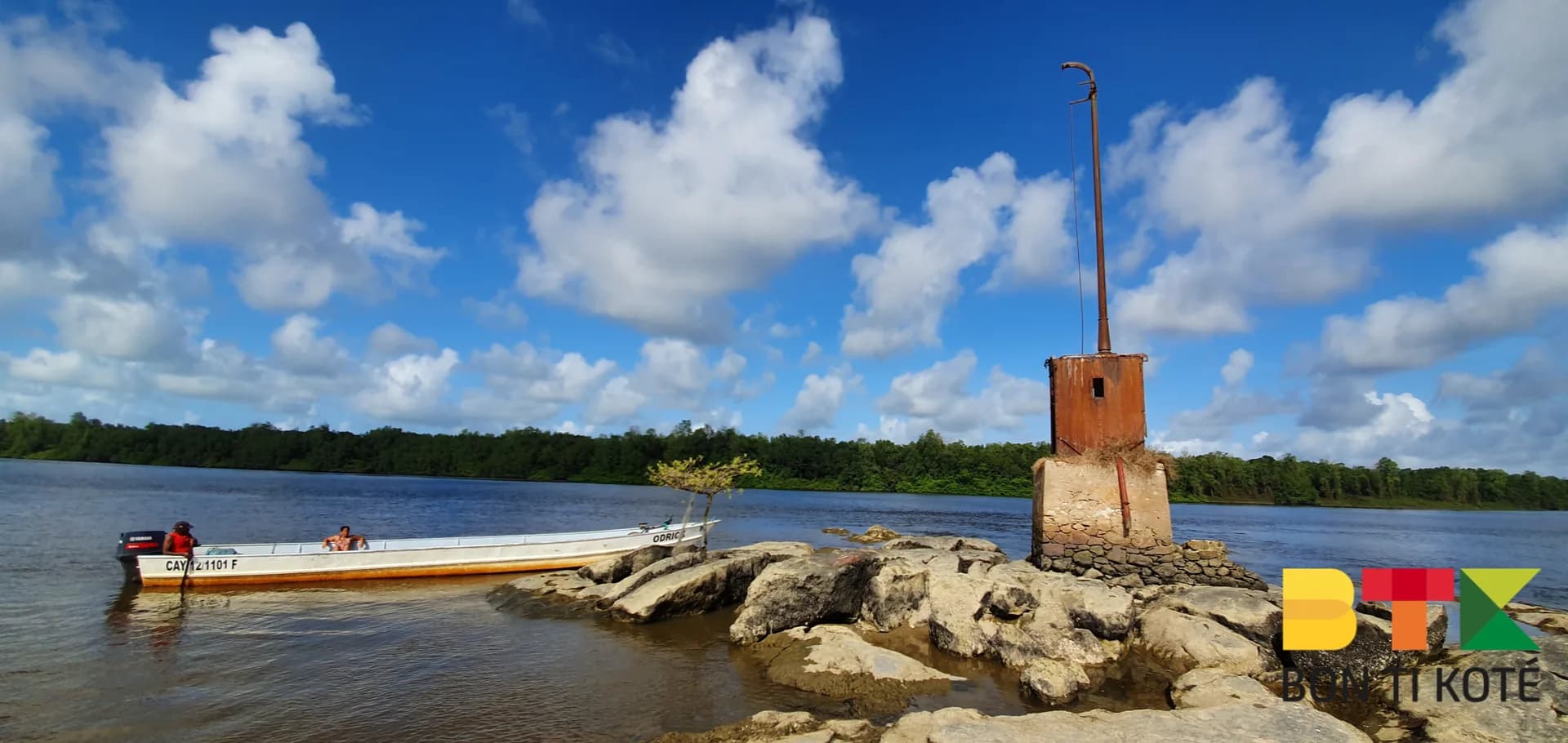
The area is a prime habitat for several bird species, including scarlet ibises, easily identified by their vivid red plumage and often gathered in large numbers in the mangroves and wetlands. Herons, egrets, spoonbills, and other coastal birds can also be spotted here. The mangroves play a central role in protecting against erosion and maintaining water quality, while providing refuge for numerous aquatic species. At the estuary stands an old navigational structure, commonly referred to as a "lighthouse", which remains a testament to the region's maritime and fluvial past.
Historically, the Sinnamary River was a transport and trade route for French colonists. It was used to carry raw materials such as timber and sugar from the interior to the coast, and later gold and other resources. The old "lighthouse", small and lacking the light of a classical maritime beacon, likely served as a landmark for boats navigating the river. Its use is now obsolete, but it bears witness to the transition from colonial exploitation to ecological stewardship.
The estuary is a site of interest for birdwatching and raising awareness about mangrove ecosystem conservation. The presence of visitors can pose conservation challenges, particularly in limiting the impact on habitats and wildlife.
The site is located in Sinnamary, in northern French Guiana. The estuary is accessible by pirogue, travelling along the river to where it meets the Atlantic Ocean.
Yes. The area is a prime habitat for scarlet ibises, recognisable by their vivid red plumage and often seen in large flocks in the mangroves. Herons, egrets, and spoonbills are also commonly observed.
The mangroves protect against soil erosion, filter sediments to maintain water quality, and act as a natural barrier, while providing shelter for numerous aquatic species.
It is an old navigational structure that likely served as a landmark for boats travelling along the river. Its use is now obsolete, but it stands as a testament to the region's maritime and fluvial past.
The site is in Sinnamary, in northern French Guiana, and the estuary is accessible by pirogue.
« Endroit magique, on a vu deux toucans en arrivant ! Sentier bien balisé, parfait pour la matinée. »
« Super site, l'eau est cristalline. Petit bémol : prévoir des chaussures qui tiennent bien, ça glisse. »
« Tip BTK validé : on y est allés à 8h, on était seuls. Vers midi c'est beaucoup plus fréquenté. »
« On a passé l'après-midi ici en famille, les enfants ont adoré la baignade. Vraiment un coup de cœur. »
À proximité
Sélection de restaurants proposée par dronmi.fr